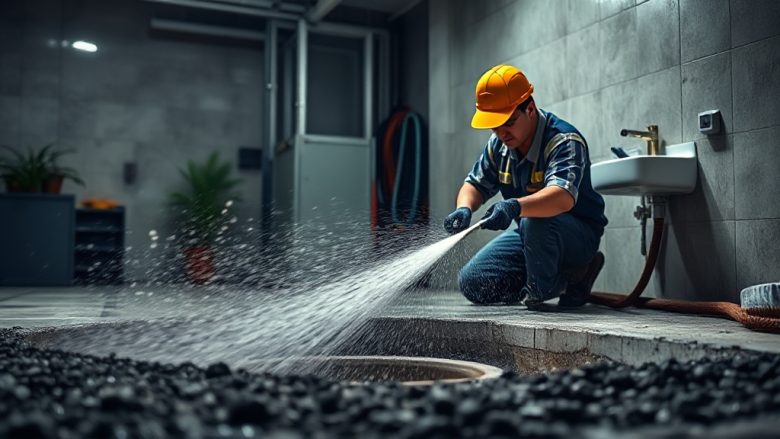
Two Hours Lost to a Clogged Drain: What I Learned About Calling a Desentupidora in Mooca
The most common mistake people make when a drain backs up in Mooca is reaching for the nearest bottle of chemical drain cleaner and pouring half of it down the pipe before checking whether the problem is actually in their unit or in the building’s main line. I know because I did exactly that on a Sunday evening, and two hours later I was standing in a puddle with a burnt-smelling kitchen and no working sink. If you have already tried the plunger, the powder, and the boiling water and the water still rises, this is the point where you stop improvising and call a desentupidora Mooca service that can inspect the line properly.
What follows is the scenario I went through, then the variations that apply if your blockage is in the bathroom, the laundry area, a restaurant kitchen, or a condominium stack. The goal is to help you avoid the two hours I wasted and get the right technician to the right pipe on the first call.
Why the DIY Route Fails Before the Technician Arrives
Chemical cleaners are designed for slow, greasy drains, not for a solid obstruction. When the line is already blocked, the product sits in the standing water, attacks the pipe walls, and does nothing to the clog itself. In older Mooca buildings with cast-iron or mixed plumbing, that sitting chemical is exactly what you do not want.
Chemical drain cleaner on a fully blocked line is worse than doing nothing, because it turns a mechanical problem into a safety and corrosion problem. If you have already poured something in, tell the technician when you call. They will flush the line before using mechanical equipment.
The second failed attempt is usually the plunger. A plunger works by pressure, and pressure needs a seal. In a kitchen sink with a dishwasher branch or a double bowl with a loose connection, the pressure escapes sideways and the clog does not move. In a bathroom, the overflow hole bleeds the pressure before it reaches the trap.
Signs the blockage is beyond a plunger
- Water rises in a second fixture when you use the first one.
- Gurgling sounds come from the floor drain or the toilet when the sink drains.
- The water level drops slowly overnight and returns when you run the tap.
- There is a sewage smell in a room that has no fixture in use.
Any of these point to a blockage in the branch line or the main stack, which is a job for a desentupidora Mooca São Paulo SP team with a rotating cable or a hydrojetting unit, not a bottle of gel.
The Call: What a Good Desentupidora Asks Before Sending a Truck
My first call went badly because I could not answer basic questions. The second call went smoothly because I had written down four things: where the water backs up, whether other fixtures are affected, the building type and age, and whether there is a grease trap or a septic tank on the property.
A professional dispatcher will ask those same questions, and their answers decide what equipment arrives. A single blocked sink gets a hand auger and a small cable machine. A blocked building main gets a truck with a hydrojetting pump and a camera reel. Sending the wrong truck costs you another hour of waiting.
Questions you should be ready to answer
- Which fixture is backing up, and is it the lowest one in the property?
- Does the water come back when a neighboring unit uses their sink or shower?
- Is there a cleanout cap visible in the basement, garage, or sidewalk area?
- Has anyone used chemical products in the last 24 hours?
- Is this a house, an apartment, a restaurant, or a commercial unit?
The cleanout question matters more than people expect. If the technician can open a cleanout, they work from outside the living space and avoid pulling a toilet or opening a wall. If there is no cleanout, the job takes longer and costs more, and a good company will tell you that on the phone rather than after they arrive.
What Actually Happens During the Service in Mooca
The technician arrives, confirms the backup point, and lays down protection before any equipment comes inside. Then the work follows a sequence that is worth understanding, because it tells you whether you are getting a real service or a quick poke that will fail again in a week.
The first step is mechanical clearing with a rotating cable or a hydrojetting hose, depending on the pipe diameter and the type of obstruction. Grease and soap scum respond to hot water jetting. Roots, wipes, and hard scale respond to a cutting head on a cable. A technician who only owns one tool will use it whether it fits or not.
The second step is verification. A drain is only clear when the flow is tested at full volume, not when the standing water disappears. The technician should run several fixtures at once and watch the cleanout or the lowest drain for backup.
The third step is the camera inspection, which is standard on main-line jobs and optional on simple fixture clogs. The camera shows whether the pipe is clear, cracked, root-intruded, or sagging. In Mooca’s older residential blocks, a sagging clay or cast-iron line under the slab is a common finding, and it explains why the same drain blocks every few months.
Hydrojetting versus cable clearing
| Method | Best for | Limitation |
|---|---|---|
| Rotating cable | Roots, solid objects, narrow branches | Does not remove grease film from pipe walls |
| Hydrojetting | Grease, scale, sediment, full-diameter cleaning | Needs a cleanout and adequate water supply |
Most serious blockages in a building main need both, in that order. If a company quotes only one method for a recurring problem, ask why.
Variations: When Your Situation Is Not a Kitchen Sink
The scenario above is the simple case. Here is how the same logic changes for the other situations I have seen in the neighborhood.
Bathroom and toilet backups
A toilet that backs up only when flushed is usually a fixture-level blockage and clears quickly. A toilet that gurgles when the shower runs is a sign of a vent or main-line problem. Do not keep flushing to test it; each flush adds water to a line that cannot drain, and in a ground-floor unit that water finds the floor drain.
Condominium stacks and common areas
In a building, the first question is ownership of the pipe. The stretch inside your unit is your responsibility; the stack and the main line are the condominium’s. A desentupidora em Mooca São Paulo SP that works with syndics will document the blockage with photos and a camera report so the building can decide who pays. Without that documentation, the argument goes in circles.
Restaurants and commercial kitchens
Commercial kitchens need the grease trap checked before the drain is cleared. If the trap is full, clearing the line just moves the problem downstream. A proper service empties and cleans the trap, jets the line, and schedules a return interval based on volume, not a one-time fix.
Septic tanks and fossa cleaning
Properties on the edge of the district that are not on the mains need tank pumping rather than drain clearing. A backed-up tank and a backed-up drain look identical from the sink, but the fix is completely different. Tell the dispatcher if your property has a tank, because a hydrojetting truck sent to a tank call is a wasted trip.
Cost, Timing, and Choosing the Right Company
Emergency calls cost more than scheduled ones, and that is normal. What is not normal is a price that changes after the equipment is on the floor. Ask for the call-out fee, the per-meter or per-hour rate, and the camera inspection fee separately before you agree. A company that refuses to give a range on the phone is a company that will negotiate from a position of advantage once your floor is wet.
Timing matters in Mooca because the district mixes residential streets with busy commercial frontage. A truck that arrives at 6 p.m. on a weekday will struggle to park and run hoses. If your blockage is not an emergency, a morning slot is faster and often cheaper.
Prevention is cheaper than any emergency call. A monthly hot-water flush of kitchen drains, a strainer in every shower, and a scheduled annual jetting for restaurant lines will prevent most of the calls I made that Sunday. For buildings, an annual camera inspection of the main line catches root intrusion before it becomes a flood.
One last practical point: keep the number of a 24-hour service saved in your phone before you need it. When the water is rising, you do not want to be comparing search results. Having a reliable contact ready is the difference between a two-hour inconvenience and a two-day cleanup.
Frequently Asked Questions
How quickly can a desentupidora arrive in Mooca?
Response time depends on the time of day and traffic, but a 24-hour emergency service typically gives an arrival window when you call. Morning and early afternoon slots are usually the fastest. If your situation involves sewage backing up into the property, say so on the call, because it is treated as a priority.
Can I stay in the apartment while the drain is being cleared?
For a simple fixture clog, yes. For a main-line job with hydrojetting, the technician may ask you to keep children and pets away from the work area and to avoid using fixtures on the same stack until the test is complete. Follow that instruction; using a fixture mid-job can send water into the work area.
What should I do if the same drain blocks again after a few weeks?
Recurring blockages are a symptom, not a repeat accident. Ask for a camera inspection of the line and a written report. The cause is usually a sagging pipe, root intrusion, or a buildup that was never fully removed. Clearing it again without inspection just restarts the clock.
Does the service cover both residential and commercial properties?
Reputable companies in the district serve houses, apartments, condominiums, and commercial kitchens. The equipment and the paperwork differ, especially for buildings that need documentation for the syndic, but the diagnostic approach is the same. Confirm the property type when you call so the right team and truck are dispatched.