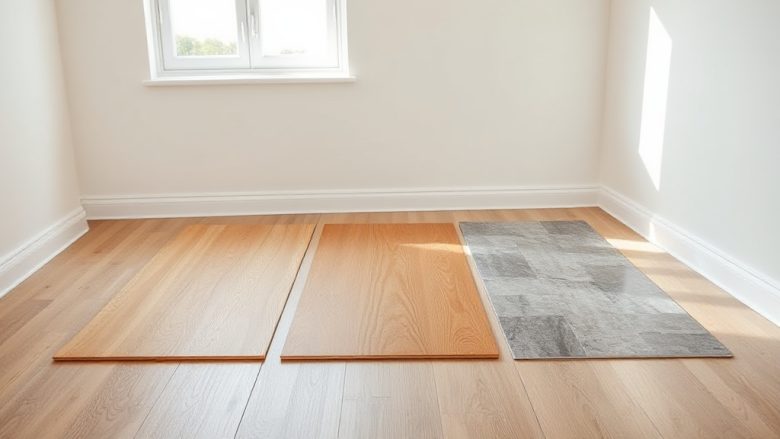
You want to upgrade your floor but the options feel overwhelming. That is the most common sentence I hear at the start of a flooring consultation, usually followed by a phone showing three saved listings and a confused expression. So here is honest, practical expert advice on flooring upgrades: a straight comparison of the three most popular choices in UK homes right now — laminate, engineered wood and luxury vinyl tile, usually shortened to LVT.
I have specified floors for Victorian terraces with uneven joists, 1970s semis with concrete subfloors, and new-build flats where the screed is still curing. Each of these three products has a genuine place. None of them wins everywhere. What follows is how I actually decide, including rough costs, durability expectations and fitting notes you can take to a fitter without sounding like you have never done this before.
What each flooring option actually is
Laminate is a photographic image of wood or stone bonded to a high-density fibreboard core, with a clear wear layer on top. It clicks together as a floating floor, meaning it is not glued or nailed to the subfloor. The image quality has improved enormously — a mid-range board now shows grain variation rather than one repeating plank — but it is still a picture, not timber.
Engineered wood has a real timber veneer, typically between 2mm and 6mm thick, glued to a plywood or multi-layer core. That construction makes it far more stable than solid oak, so it copes with underfloor heating and normal seasonal movement. It can be sanded and refinished, usually two or three times depending on veneer thickness. It is the only one of the three that is genuinely wood underfoot.
LVT is a vinyl plank or tile with a printed design layer and a transparent wear layer, backed with either a rigid stone-polymer core or a softer gluedown backing. Rigid-core click LVT has become the default recommendation for kitchens and bathrooms because it handles splashes, spills and humidity without swelling. It feels warmer and quieter than laminate, though it still does not feel like timber.
Cost, durability and fitting compared
Prices below are typical UK supply costs per square metre in 2026, before fitting and before any subfloor preparation. Fitting labour usually adds £15 to £35 per square metre, and subfloor work can add more than the flooring itself if the base is bad.
| Factor | Laminate | Engineered wood | LVT |
|---|---|---|---|
| Typical supply cost per m² | £12–£30 | £35–£90 | £20–£55 |
| Wear layer / lifespan | 10–20 years | 25–40 years with refinishing | 10–20 years |
| Water resistance | Poor to moderate | Poor | Excellent |
| Underfloor heating | Some boards only | Yes, if specified | Yes |
| Can be sanded | No | Yes, 2–3 times | No |
| Fitting method | Floating click | Floating or glued | Click or gluedown |
| Feels underfoot | Hard, slightly hollow | Warm, solid | Warmer, quieter |
| Best rooms | Bedrooms, lounges | Lounges, hallways, dining rooms | Kitchens, bathrooms, hallways |
Two things that table cannot show. First, laminate and LVT are both floating floors in their click versions, so they need an expansion gap at every wall and a flat subfloor — generally no more than 3mm deviation over a 2m straightedge. Second, engineered wood can be glued down, which is more labour but eliminates the hollow sound and reduces movement in larger rooms.
Pros and cons of laminate
The case for laminate is simple: it is the cheapest way to get a consistent, hard-wearing floor across a large area, and modern boards look far better than the glossy orange planks people remember from the 2000s. It is quick to fit, usually a day for a decent-sized room, and you can walk on it immediately. If you are flooring a rental or a room you may change again in five years, laminate is often the sensible financial call.
The case against it is moisture and repair. A dishwasher leak or an overflowing bath can swell the core permanently, and because the boards are printed, a deep scratch cannot be sanded out. You replace the plank or you live with it. It also sounds hollow underfoot unless you spend extra on a good acoustic underlay, which matters in flats with neighbours below. In period homes with bouncy floors, laminate can amplify every footstep.
Pros and cons of engineered wood
Engineered wood is what I recommend when someone says they want a floor they will never have to think about again. The real veneer takes stain and lacquer like solid timber, so scratches can be sanded and refinished rather than replaced. It adds resale value in a way that laminate rarely does, and in a period property it sits far more comfortably against original skirting and door frames. It also feels and sounds like wood because it is wood.
The trade-offs are cost and water. You will pay roughly two to three times the laminate price for a comparable area, and a spill left standing overnight can stain or lift the veneer. It is not a bathroom floor. Engineered wood also needs a stable environment — if you are fitting it into a room that is regularly unheated, expect movement. And cheap boards with a 2mm veneer cannot be sanded as many times as a 5mm or 6mm veneer, so check that number before you buy, not after.
Pros and cons of LVT
LVT is the most practical floor of the three for wet and busy spaces. It shrugs off splashes, pet accidents and muddy boots, and the rigid-core versions are dimensionally stable enough to run through a kitchen into a hallway without a break. It is warmer and quieter underfoot than laminate, and because it comes in tile formats as well as planks, it works in bathrooms where wood simply should not go. Fitting is straightforward for a competent DIYer in click form.
What it is not is wood. At close range, most LVT designs still read as vinyl, and the pattern can repeat noticeably across a large open-plan space unless you buy a product with a long repeat. It also cannot be sanded or refinished, so a gouge from a dragged appliance is permanent. Finally, cheap LVT with a thin wear layer — under 0.3mm — will scuff and dull quickly in a hallway. Look for 0.5mm or more in domestic use.
How to decide room by room and budget by budget
Start with the room, because that removes most of the confusion. For kitchens, bathrooms, utility rooms and busy hallways, LVT is the default answer. It handles water, it is easy to clean, and it will not swell or stain. For lounges, dining rooms and bedrooms in a home you plan to keep, engineered wood is worth the extra spend — it ages well, refinishes, and looks better the longer it is down. For bedrooms, spare rooms, rentals and anything on a tight budget, laminate does a perfectly respectable job.
Then look at the subfloor, because this is where budgets quietly break. If you have floorboards with gaps and movement, you will need plywood overlay before any floating floor goes down. If you have a concrete slab with a damp issue, no wood-based product should go near it until that is resolved — LVT over a suitable smoothing compound is the safer route. Underfloor heating narrows things further: many laminates are excluded, most engineered woods are fine if acclimatised and gradually brought up to temperature, and LVT generally performs well.
Finally, be honest about how long you are staying. If the answer is two years, laminate or LVT makes financial sense. If the answer is ten years or more, engineered wood usually costs less per year of use once you factor in one refinish instead of a full replacement. And whatever you choose, spend on the underlay and the subfloor preparation. A £60 per square metre floor laid on a badly prepared base will feel and perform worse than a £25 floor laid properly. That single point is the most useful piece of expert advice on flooring upgrades I can give anyone.
Frequently asked questions about flooring upgrades
Which is better for a kitchen, laminate or LVT?
LVT, without hesitation. Kitchens produce spills, steam and dropped pans, and laminate cores swell when water sits on the joints. Rigid-core click LVT handles all of that and is comfortable to stand on for long periods.
Can engineered wood be fitted over underfloor heating?
Yes, provided the board is specified for it and the heating is commissioned gradually. The veneer and plywood construction is more stable than solid timber, but you still need to acclimatise the boards and avoid sudden temperature swings.
How much does a flooring upgrade cost in a typical UK room?
For a 15 square metre room, expect roughly £180 to £450 in materials for laminate, £300 to £825 for LVT, and £525 to £1,350 for engineered wood, before fitting and subfloor preparation. Fitting typically adds £225 to £525.
How long should I let a new floor acclimatise before fitting?
Wood-based products need 48 to 72 hours in the room at normal living temperature, with packaging opened. LVT needs less, usually 24 to 48 hours, but it should still be laid flat and allowed to reach room temperature for easier fitting.